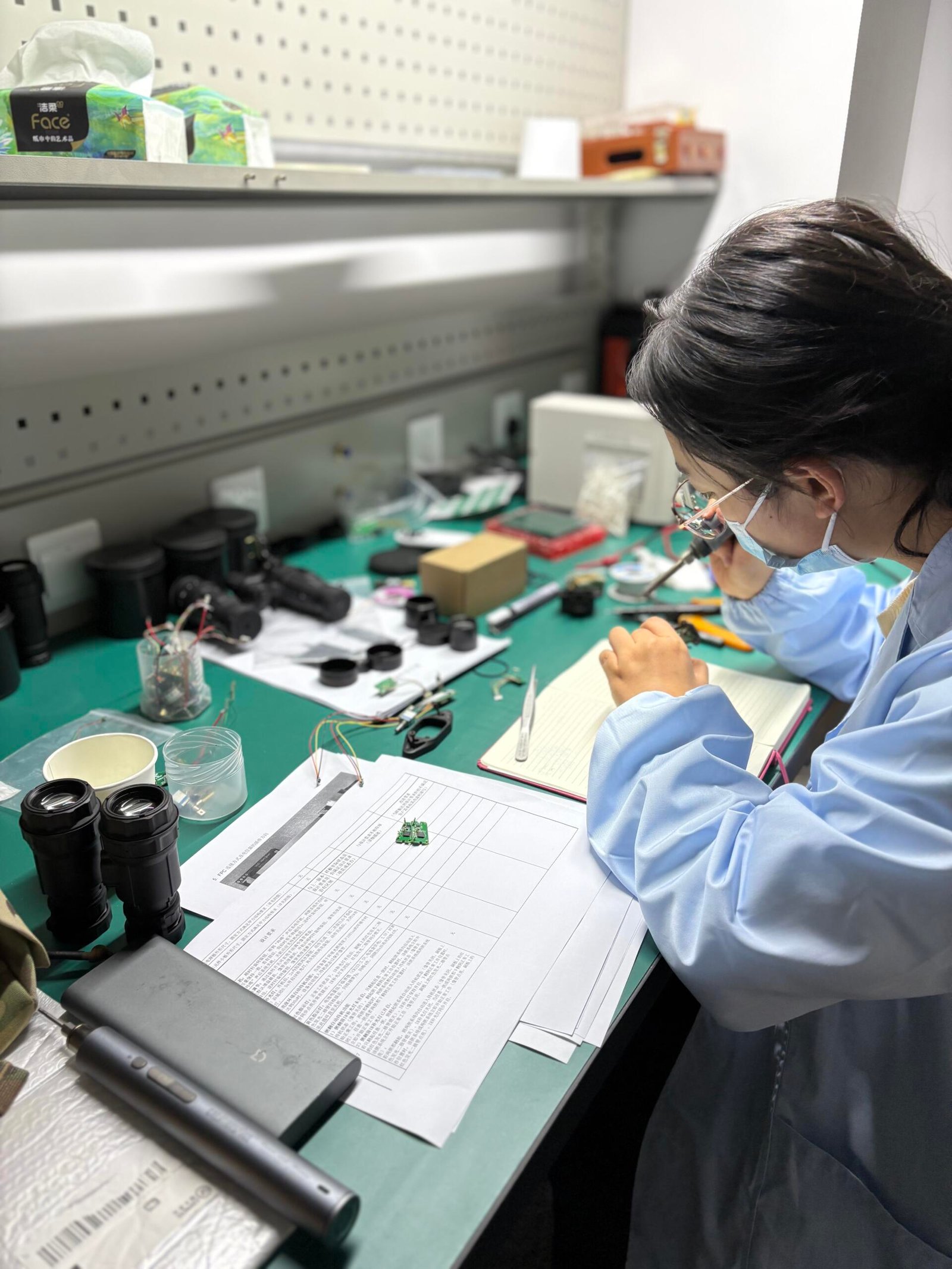

Night Vision Terminology Explained
To help users interpret technical data and performance specifications, Luxnova Optronics provides a detailed explanation of professional terms commonly used in the field of night vision and image intensification.
Understanding these key parameters enables customers to make informed comparisons and select the right product for their needs.
Knowledge Base
Luxnova Optronics Knowledge Base is a comprehensive learning and support platform created to help clients, partners, and professionals understand the science, performance, and operation of modern night vision technologies.
It combines technical documentation, research data, and educational resources to make complex optical technology easy to understand and apply.


Technology Comparison
Distinguishing gamma photons from neutron particles in mixed radiation fields.
Maintaining sensitivity and accuracy in harsh environments (temperature, vibration, electromagnetic noise).
Achieving real-time data processing for fast decision-making in security and field operations.
Complying with strict safety and calibration standards.
Key Terms:
- Gain: The amplification factor showing how much the system multiplies incoming light. Higher gain improves brightness in very dark environments.
- SNR (Signal-to-Noise Ratio): Indicates image clarity. A higher SNR means a cleaner, sharper image with less noise interference.
- Resolution: The level of image detail, usually measured in line pairs per millimeter (lp/mm). Higher resolution allows better recognition of small or distant objects.
- Halo: The circular glow that appears around bright light sources. Lower halo values result in clearer and more accurate imaging.
- EBI (Equivalent Background Illumination): The level of background light produced by the device itself. Lower EBI enhances visibility under extremely dark conditions.
Luxnova Optronics glossary helps professionals, researchers, and enthusiasts decode technical terminology and understand the real-world performance of night vision systems.

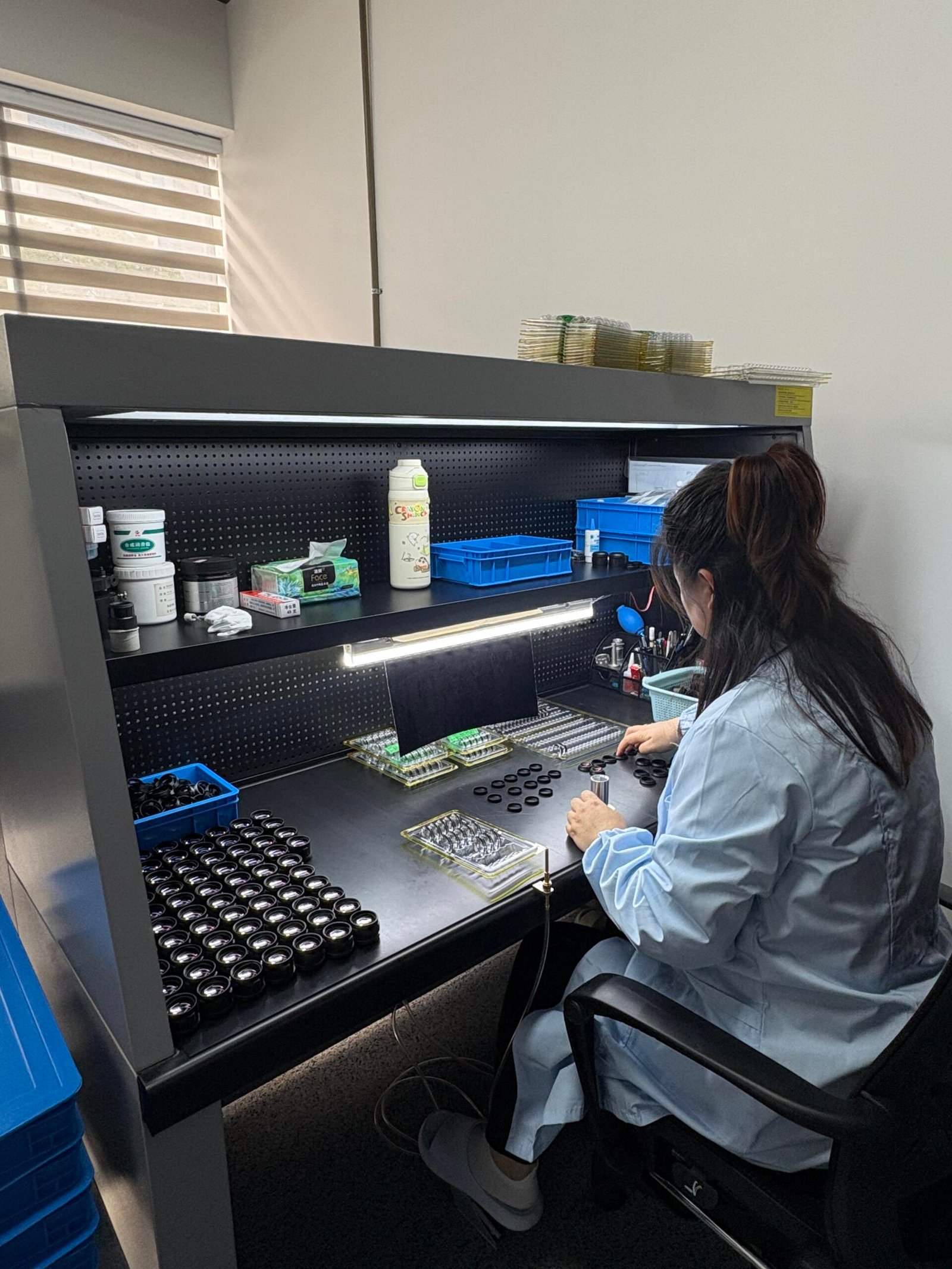
How Luxnova Optronics Adds Value
The Knowledge Base also features a technology comparison chart showing the differences between Generation 2, Generation 3, and Generation 3+ image intensifier technologies.
This visual guide helps customers quickly evaluate which generation best fits their operational or research needs.
Example Comparison Table:
| Parameter | Gen 2 | Gen 3 | Gen 3+ |
|---|---|---|---|
| Photocathode Type | Multi-Alkali | Gallium Arsenide (GaAs) | Enhanced GaAs |
| Resolution (lp/mm) | 45–55 | 64–72 | 72+ |
| Signal-to-Noise Ratio (SNR) | 18–22 | 22–28 | 28–30+ |
| Figure of Merit (FOM) | <1250 | 1600–2000 | 2000–2300+ |
| Sensitivity | Good | Excellent | Superior |
| Lifespan (hours) | ~5,000 | ~10,000 | 12,000+ |
| Performance in Low Light | Moderate | Excellent | Exceptional |
Key Insights:
- Gen 2: Reliable and cost-effective for commercial, industrial, and entry-level professional use.
- Gen 3: Designed for high-performance tactical and surveillance applications with significantly improved sensitivity and lifespan.
- Gen 3+: The latest generation offering superior clarity, extended life, and optimized performance under extreme low-light conditions.
Additional Resources
The Knowledge Base also includes:
- Product Manuals & Datasheets: Full technical specifications and setup guides.
- Maintenance & Operation Guides: Tips to ensure long-term reliability and optimal performance.
- Training & Tutorials: Educational content for operators, distributors, and technicians.
R&D Insights: Articles and whitepapers from Luxnova Optronics engineering team on optical innovation and performance testing.